
Introduction
In 2024, the web hosting landscape has radically evolved, offering a multitude of solutions that can quickly become a headache for the uninitiated. Gone are the days when simple “shared hosting” met all needs. Today, choosing the right infrastructure for your web application requires a detailed understanding of technological, financial, and strategic challenges. Serverless, containers (Docker), or VPS: these terms resonate like true dilemmas for startups, SMBs, and scale-ups seeking performance, scalability, or cost control.
Whether you're a CTO evaluating the best technical options, a founder looking to optimize the TCO (Total Cost of Ownership) of your MVP, or a developer wanting to understand the "real" trade-offs, this article is for you. At Aetherio, our role is to provide a clear and pragmatic vision, helping you navigate this complex ecosystem. Building on our experience in custom web application development and CTO as a Service support in Lyon and its surroundings, we will break down the strengths and weaknesses of each solution for you, with a forward-looking perspective towards 2026 and the latest innovations.
This article is not just a technical comparison; it's a strategic guide for making informed decisions. We will explore modern hosting options, from traditional VPS to cutting-edge Serverless solutions, including orchestrated containers, with concrete use cases, Nuxt/Vue.js recommendations, and consideration of compliances such as GDPR. Get ready to demystify your web application hosting.
1. Classic VPS: Full Control, Flexibility, and Required Maintenance
The Virtual Private Server (VPS) remains a strong hosting option, especially for projects requiring granular control over the server environment. Providers like Hetzner, OVH, or Scaleway offer robust and economically accessible VPS solutions. A VPS is, in essence, a virtual machine that you rent, but whose resources (CPU, RAM, storage) are dedicated to you, unlike shared hosting.
1.1 Advantages and Disadvantages of VPS for a Web Application
Advantages:
- Full Control: You get root access, allowing you to install any operating system, software, or configuration. Ideal for very specific setups or legacy applications.
- Predictable Cost: VPS prices are often fixed and competitive, which makes budgeting easier, especially for applications with stable and predictable traffic. Offers start at a few dollars (euros) per month.
- Dedicated Performance: Unlike shared hosting, your resources are not shared with other users, ensuring consistent better performance.
- Flexibility: Easy vertical scaling by increasing VPS resources if your traffic grows. Some providers allow custom configurations.
Disadvantages:
- Self-Managed Maintenance: The management of the operating system, security updates, backups, server configuration (Nginx, Apache, database), and your application's environment falls to your team. This represents a significant hidden cost in time and expertise.
- Limited Scalability: Horizontal scalability (adding more servers) is more complex to implement on classic VPS, requiring manual configuration of replication, load balancing, etc.
- Initial Complexity: Requires DevOps expertise for initial setup and maintenance. For a small team or an MVP, this complexity can be a major hurdle.
1.2 Ideal Use Case and Recommendations for Nuxt/Vue.js on a VPS
A VPS is an excellent choice for:
- SMBs with stable business applications and tight budgets, especially if they already have in-house technical expertise for server management.
- Projects with very specific security or compliance requirements needing full control over the software stack.
- Solo developers or small teams at the beginning of their project, able to manage server operations and aiming to minimize initial costs.
- Applications requiring significant and continuous CPU/RAM resources without large traffic fluctuations, such as certain game servers or intensive computing applications.
For Nuxt or Vue.js applications, deployment on a VPS involves configuring a Node.js server (with PM2, for example) to serve the application, and potentially a reverse proxy (Nginx) for SSL management and port redirection. If your Vue.js application is purely static, a simple Nginx web server is sufficient. To manage CI/CD, you will need to set up manual or automated deployment scripts, which can be time-consuming without the right tools.
2. Managed Containers: The Best Balance of Simplicity/Power for SaaS
The emergence of managed container platforms marks a major evolution in application hosting. Players like Railway, Fly.io, Render, and Docker as underlying technology, have popularized an approach where your application is packaged with all its dependencies into a consistent and portable environment: the container what is Docker. This approach solves many compatibility and deployment issues by ensuring your application runs the same way, regardless of the environment.
2.1 Docker Containers: A Deployment Revolution
Containers, and particularly Docker containers, have transformed how developers package and deploy their applications. They offer isolation comparable to virtual machines but with a much lighter footprint. This means you can run multiple isolated applications on the same server, maximizing resource utilization.
Advantages:
- Portability: A Docker container works the same way on your development machine, on a staging server, or in production, eliminating "it works on my machine" issues.
- Isolation: Each application is isolated in its own container, reducing dependency conflicts and increasing security.
- Intrinsic Scalability: Modern platforms can easily launch new instances of your containers to handle traffic spikes, then scale them down automatically.
- Simplified Deployment: Updating the application involves deploying a new version of the container, minimizing downtime. This is a major asset for optimizing your continuous deployment.
2.2 Managed Container Platforms: Railway, Fly.io, Render
These services handle container orchestration, load balancing, log management, security, and many other complex DevOps aspects. This allows developers to focus on their application's code rather than the infrastructure.
Railway.app: Ideal for full-stack developers. Offers an intuitive interface, generous pay-as-you-go pricing, and easy integration with GitHub for automatic deployments. Particularly suitable for MVPs and medium-sized applications, with a pricing model that adapts to consumption. Excellent PostgreSQL and Redis support.
Fly.io: Distinguished by its "Edge" architecture for containers. It deploys your applications closer to your users worldwide, reducing latency. Excellent for applications requiring low global latency or geographic distribution of users. Pricing is also usage-based.
Render.com: A very comprehensive "Platform as a Service" (PaaS) solution that supports containers, databases, cron jobs, and more. Aims to be a simple and scalable alternative to the complexities of AWS/GCP/Azure for most uses. Very good for teams looking for an easy-to-manage "all-in-one" solution.
Ideal Use Case:
- SaaS (Software as a Service) Applications: Thanks to their scalability, resilience, and simplified management, these platforms are perfect for creating multi-tenant SaaS or building a SaaS, allowing your application to grow with your business without heavy infrastructure refactoring.
- Robust APIs: For mobile or web application backends that require high availability and the ability to handle peak loads.
- Microservices: Each microservice can be deployed in its own container, simplifying management and independent development.
- Startups and Scale-ups: Allow focusing on the product without hiring a DevOps team from the start. These solutions are perfectly suited for custom web application development services.
For a SaaS application architecture, these services provide a valuable abstraction layer, allowing development teams to focus on business logic.
3. Serverless / Edge: On-Demand Elasticity for Ultra-Performance
The Serverless model, often associated with Edge Computing, represents a radically different approach to hosting. Here, you no longer manage any servers. You simply deploy your code (functions), and the cloud provider (AWS Lambda, Vercel, Netlify, Cloudflare Workers) takes care of running it on demand. Edge Computing pushes this logic further by executing this code closer to the end-user to minimize latency.
3.1 How Serverless and Edge Computing Work
The principle of Serverless is "pay-as-you-go": you only pay when your code executes. Serverless functions are ephemeral; they start, perform their task, then shut down. Edge Computing, on the other hand, involves distributing code execution or data storage over a network of geographically dispersed servers (the "Edge nodes").
Advantages:
- Unlimited and Automatic Scalability: The system transparently handles load increases without any human intervention. Ideal for unexpected traffic spikes.
- Optimized Cost: If your application has intermittent traffic, the cost can be significantly lower than a server running 24/7, even when idle. The first few million requests are often free.
- Zero Maintenance: No more need to manage servers, operating systems, security patches. The provider handles everything.
- Edge Performance: For solutions integrating Edge, latency is minimized, offering an ultra-fast user experience for static sites or lightweight APIs.
Disadvantages:
- Cold Start: For functions that haven't been recently invoked, there's a slight startup delay (cold start) while the execution environment launches. This delay can be critical for some interactive applications and must be measured.
- Execution Limits: Serverless functions often have limits on execution time, allocated memory, and package size, making them unsuitable for long-running or resource-intensive tasks.
- Debugging/Monitoring Complexity: Debugging and monitoring can be more complex due to the distributed and ephemeral nature of functions.
- Vendor Lock-in: Once your application is deeply integrated with a Serverless platform (e.g., AWS Lambda), it can be difficult to migrate to another provider.
3.2 Major Players and Use Cases for Nuxt/Vue.js Applications
Vercel: Leader for deploying frontends (Next.js, Nuxt.js) and Serverless functions. Offers an exceptional developer experience, Git-based deployment, and unparalleled performance thanks to their global CDN. Ideal for statically generated (SSG) or server-side rendered (SSR) Nuxt/Next.js sites.
Netlify: A long-standing partner in the Jamstack movement, Netlify also excels in hosting static sites and Serverless functions. Simple, performant, and very generous with its free and starter plans.
Cloudflare Workers: Offers a Serverless model executed directly on Cloudflare's global Edge network. With virtually no cold start times, it's perfect for ultra-fast APIs, intelligent routing, or manipulating HTTP requests at the edge of the network.
AWS Lambda / Google Cloud Functions / Azure Functions: Serverless solutions from major cloud providers, offering deep integration with their entire ecosystem of services. More complex to implement for beginners, but extremely powerful for complex enterprise architectures.
Ideal Use Case:
- Static or dynamic websites with little backend logic: Blogs, showcase sites, portfolios, Jamstack e-commerce sites.
- Lightweight and interactive APIs: Authentication services, stateless microservices, webhooks.
- High-conversion landing pages and forms: Benefit from fast execution and low cost for specific marketing campaigns.
- Automation functions: Image processing, sending transactional emails, scheduled tasks.
For Nuxt.js applications (especially in SSR or hybrid SSG mode) or Vue.js with a lightweight backend, Vercel or Netlify are preferred choices due to their native integration and exceptional performance on the CDN.
4. Hyperscalers (AWS/GCP/Azure): When Customization is Key
Cloud giants like Amazon Web Services (AWS), Google Cloud Platform (GCP), and Microsoft Azure offer the broadest and most powerful ecosystem for application hosting. Here, we're no longer talking about isolated VPS or containers, but a myriad of interconnected services (compute, storage, databases, machine learning, networking, IoT, etc.) that can be orchestrated to create extremely complex and resilient architectures.
4.1 The Power and Complexity of Hyperscalers
Advantages:
- Complete Ecosystem: Hundreds of services for every need (managed databases, AI/ML, IoT, analytics tools, etc.).
- Unlimited Horizontal and Vertical Scalability: Ability to handle any volume of traffic and data, with unparalleled elasticity.
- High Availability and Resilience: Architecture based on regions and availability zones, allowing the construction of fault-tolerant applications.
- Regulatory Compliance: Hyperscalers offer the highest level of security and compliance certifications (GDPR, HIPAA, ISO, etc.), essential for certain industries.
- Constant Innovation: These platforms are at the forefront of technological innovation, rapidly integrating the latest advancements (AI, Serverless, Edge).
Disadvantages:
- Cost: Potentially very high if not optimized. The "pay-as-you-go" model can be difficult to predict, and data transfer costs (egress) can be surprising.
- Complexity: Requires specialized DevOps and Cloud expertise to design, deploy, and maintain architectures. The learning curve is steep.
- Vendor Lock-in: Once your application is deeply integrated into a cloud ecosystem, migrating to another provider can be extremely costly and difficult.
- Provisioning: Setting up the infrastructure can be time-consuming and requires Infrastructure as Code tools (Terraform, CloudFormation).
4.2 Use Cases for Large-Scale Applications and Nuxt/Vue.js Architectures
Hyperscalers are suitable for:
- Critical enterprise applications: Requiring very high availability, extreme performance, and stringent security/compliance levels.
- Complex multi-tenant SaaS platforms: Managing millions of users, large amounts of data, and extensive integration needs.
- Projects with specific AI/ML, IoT, or Big Data needs: Their managed services in these areas are unmatched.
- Organizations subject to strict regulations: For which infrastructure certification is non-negotiable.
For Nuxt/Vue.js applications within a cloud ecosystem, you could use:
- AWS Amplify / Google Firebase: For fully managed Serverless backends and easy integration with your frontends for MVPs or applications with simple user management.
- AWS EC2 / GCP Compute Engine: For hosting your Node.js backend (SSR or API).
- AWS ECS / EKS / GCP Kubernetes Engine: For large-scale Docker container orchestration.
- CDN (CloudFront, Cloud CDN): For fast distribution of your static assets and caching of your pre-rendered Nuxt pages.
Cloud expertise is more necessary than ever to navigate these complex environments and build custom web application development that fully leverage these architectures.
5. EU Hosting and GDPR: A Priority for Responsible Data Handling
With the increasing importance of data protection and the General Data Protection Regulation (GDPR) in Europe, the choice of your hosting location is no longer just a technical consideration, but a legal imperative. Hosting your data in Europe through compliant providers is essential to avoid substantial fines and maintain user trust.
5.1 The Challenges of GDPR Compliance and Data Center Choice
GDPR requires that personal data of European citizens be processed and stored securely, with specific rights for individuals (right to be forgotten, data access, etc.). Choosing a host whose data centers are located in Europe, and who are themselves GDPR compliant, is a crucial first step.
Compliant Options and Key Players:
- OVHcloud (France): A major player with many data centers in Europe, recognized for its commitment to data sovereignty and GDPR compliance. Offers VPS, dedicated servers, and cloud offerings.
- Hetzner (Germany): Offers dedicated servers and VPS at very competitive prices, with data centers located in Germany and Finland. Strict on data protection.
- Scaleway (France): A subsidiary of Iliad (Free), offers a full range of cloud services (Compute, Storage, IoT) with data centers based in France and the Netherlands. Heavily focused on compliance and digital sovereignty.
- AWS / GCP / Azure (European Regions): Hyperscalers offer specific regions in Europe (e.g., Paris, Frankfurt, Dublin for AWS; Paris, Frankfurt, Amsterdam for GCP; France Central, West Europe for Azure). While more complex to configure for compliance, these regions allow compliance with GDPR, provided that the location of all services used and data transfers outside the EU are carefully managed.
- Railway, Fly.io, Render: These managed container platforms often offer the option to choose the hosting region. Ensuring that a European region is selected and that their data processing policy complies with GDPR is essential. Note that Fly.io, with its Edge architecture, offers more precise compliance by automatically deploying your application closer to your European users.
5.2 Watch Points for Hosting Your Application in Europe
- Data Center Location: Explicitly verify where your provider's data centers are located. US servers should be avoided for European personal data.
- Host's GDPR Certification: Ensure that the host itself complies with GDPR principles and can provide the necessary written commitments (DPA - Data Processing Addendum).
- Data Transfers Outside the EU: Be vigilant about third-party services (CDN, analytics, marketing tools) that could lead to data transfers outside the EU. Favor solutions with servers in Europe.
- Logs and Backups: Ensure that your application's logs and backups are also stored in GDPR-compliant infrastructures.
As a SaaS support partner, Aetherio supports its clients in Lyon and France in bringing their infrastructure into compliance, choosing the most appropriate solutions for their technical and regulatory needs.
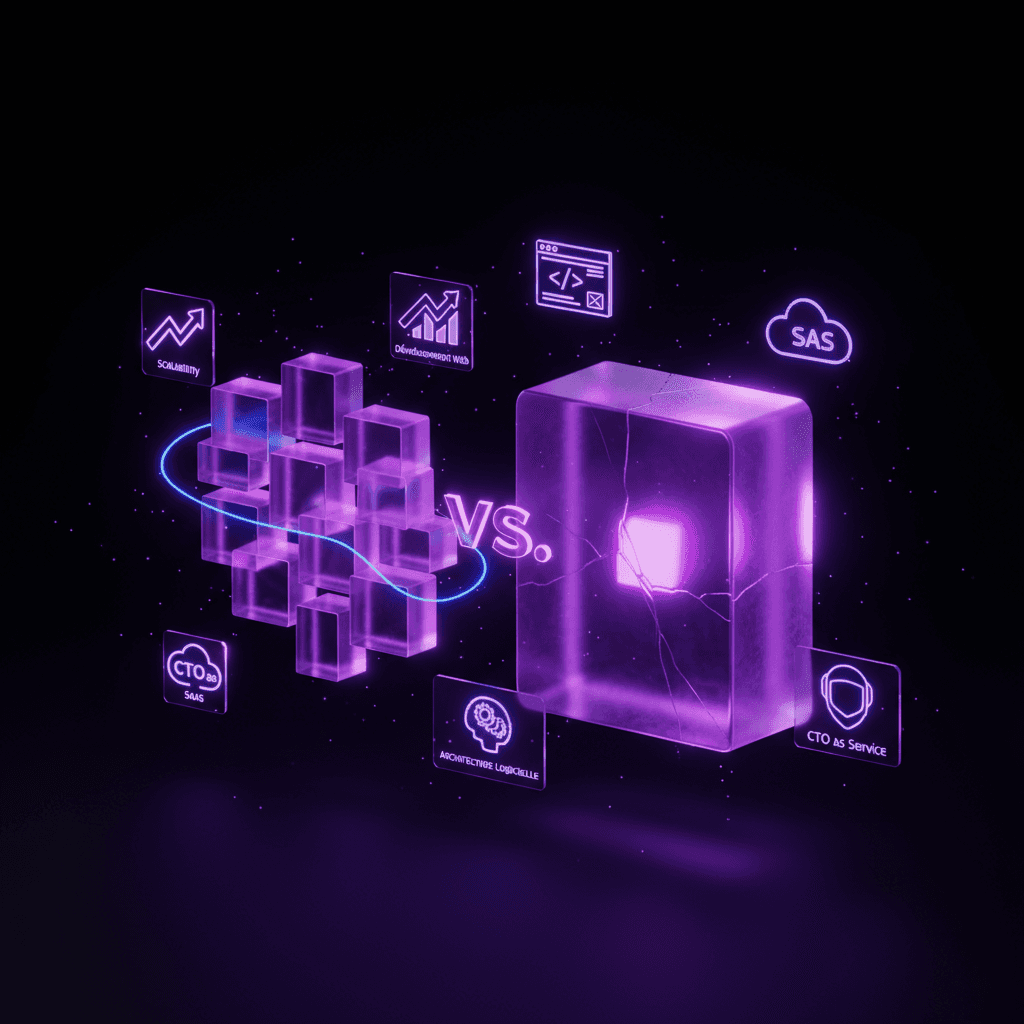
6. Comparison Table: Serverless vs. Containers vs. VPS
To summarize the specifics of each approach, here is a comparative table highlighting the essential criteria for your decision.
| Characteristic | VPS (E.g., Hetzner, OVH) | Managed Containers (E.g., Railway, Fly.io) | Serverless/Edge (E.g., Vercel, AWS Lambda) | Hyperscaler Cloud (E.g., AWS EC2/ECS+Lambda) |
|---|---|---|---|---|
| Complexity | Medium (manual server management) | Low to Medium (automated deployment) | Very Low (code deployment) | Very High (multitude of services) |
| Initial Cost | Low (a few €/months, ~$5-10/month) | Low (often a free tier) | Very low (generous free tier) | Varied (often higher) |
| Cost at Scale | Linear (increases with server count) | Highly variable (pay-as-you-go, can be opaque) | Highly variable (pay-as-you-go, hard to estimate) | Highly variable (pay-as-you-go, optimization needed) |
| Scalability | Manual / Limited (mostly vertical) | Automatic (horizontal, on demand) | Unlimited and automatic (on demand) | Unlimited and automatic (very granular) |
| DevOps Maintenance | High (everything to manage) | Low (platform manages infra) | Zero (provider manages infra and runtime) | High (orchestration, services) |
| Performance | Good (depending on config) | Very good (optimized deployment) | Excellent (Edge, CDN), except cold start | Excellent (deep optimization) |
| Cold Start | Not applicable (server always active) | Not applicable | Present (can be an issue) | Can be present (depending on service) |
| EU/GDPR Location | Very good (easy choice) | Good (region choice) | Good (region/Edge choice) | Excellent (precise region choice) |
| Ideal Use Case | Stable business apps, fixed budgets | SaaS, APIs, Microservices, MVPs | Static sites, lightweight APIs, ephemeral functions | Large enterprises, complex platforms, AI/ML |
| Control | Total (OS, software) | Moderate (container) | Limited (code only) | Granular (control over each service) |
| Flexibility | Very high | High | Medium (per function) | Very high |
7. How to Evolve Your Hosting Over Time
Choosing a hosting solution is not a decision set in stone. One of the fundamental principles of modern software engineering is to build scalable architectures. Here's how to consider this evolution:
- Start Small and Iterate: For an MVP or a project in the validation phase, a VPS or a simple managed container platform like Railway or Render can be an excellent starting point. The goal is to launch quickly, validate the market, and gather user feedback.
- Monitor and Analyze: Use monitoring tools (Datadog, Grafana, Promotheus) to understand the actual load on your application (CPU, RAM, disk usage, DB queries, latency). This data is crucial for justifying an infrastructure evolution.
- Refactor the Architecture: If your application starts to scale or if your business needs diverge, it may be necessary to refactor part of your architecture. For example, moving from a monolithic VPS to a containerized microservices architecture, or outsourcing specific functions to Serverless.
- Consider Long-Term Costs: A cheap solution initially can become very expensive in maintenance or performance if it's not adapted to your business growth. Evaluate the TCO, not just the direct hosting cost.
- Don't Hesitate to Seek Support: The complexity of modern information systems is such that it is often wise to consult experts. At Aetherio, we act as a true CTO as a Service for companies in Lyon and beyond, helping you define the technical strategy, choose the right technologies, and anticipate necessary evolutions. Our expertise in custom web application development allows us to advise you throughout the entire lifecycle of your application, from design to hosting optimization.
Conclusion
The choice between Serverless, Docker containers (Docker), and VPS for your web application's hosting in 2026 is not just a technical decision, but a strategic equation that directly impacts your budget, agility, and the longevity of your project. From the total control of a VPS to the on-demand elasticity of Serverless, passing through the power/simplicity balance of managed containers, each option offers a unique set of advantages and disadvantages.
For an MVP or a stable business application, a VPS may suffice, provided you have in-house DevOps expertise. For startups and SMBs launching SaaS services and seeking scalability without the infrastructure headaches, platforms like Railway, Fly.io, or Render are true game-changers. Finally, Serverless and Edge, embodied by Vercel or AWS Lambda, deliver blazing-fast performance for static sites and lightweight APIs, with an ultra-optimized economic model.
And let's not forget the crucial importance of GDPR compliance: locating your hosting in Europe is, more than ever, an imperative for protecting your users' data. Whether you are in Lyon, Villeurbanne, or elsewhere, Aetherio is your CTO partner and technical expert to guide you through these choices. We help you build an agile, performant, and secure web architecture, leveraging the most modern technologies (Vue.js, Nuxt.js, Node.js, TypeScript, and AI).
Don't let the complexity of hosting hinder your innovation. Contact Aetherio today for an audit of your infrastructure or to discuss your next web application project. Let's start building the future of your application together by choosing the hosting best suited to your ambition.
Further Reading:
- Complete Docker Guide for Web Developers - Containerization and Deployment in 2026
- CI/CD Pipeline: Automating Your Web Application Deployments from A to Z
- SaaS Architecture: Complete Guide to Data Management and Strategic Challenges in 2026